




Practical strategies to increase engagement, motivation, and workplace performance.
Improving workforce engagement is a powerful business driver. When engagement drops, productivity slows, staff turnover rises, and profitability suffers. For CEOs and HR leaders focused on growth, understanding how to improve employee engagement is essential to building an efficient, high-performing organisation.
In this guide, we outline how to improve staff engagement using proven, practical strategies…
1. Recognise and Reward Achievements Consistently
Recognition is one of the strongest drivers of engagement. Employees who feel appreciated are more motivated, more productive, and more likely to stay with their employer.
Research shows that employees who receive regular recognition are much more engaged and less likely to leave their organisation. Yet many companies still rely on annual appraisals rather than ongoing feedback and rewards.
Improving employee engagement starts with embedding recognition into everyday culture. Celebrate milestones, acknowledge great work publicly, and empower peer-to-peer recognition. Timely, visible appreciation reinforces positive behaviours and encourages discretionary effort.
For busy HR teams and senior leaders, implementing frequent recognition can be an easy win. Shifting from an annual rewards system to a ‘little and often’ approach can reduce costs and administrative burdens, while driving even better engagement results.
2. Communicate Clearly and Create Alignment
One of the quickest ways to erode staff engagement is poor internal communication. When employees don’t understand company priorities, leadership expectations, or how their work contributes to broader goals, motivation declines.
Research shows that organisations with effective communication practices are 3.5 times more likely to outperform their peers. Clear communication builds trust, alignment, and accountability across teams. It keeps everyone on the same page and pulling in the same direction.
Some practical ways to improve communication include:
- Share strategic updates regularly
- Clarify objectives (both at the strategic and employee level)
- Create channels for two-way dialogue
- Encourage managers to hold consistent check-ins and team briefings
When communication flows both ways, employees feel informed and understand the role they need to play in the organisation’s success.
3. Run Regular Engagement Surveys and Act on the Results
If you want to improve employee engagement effectively, you need measurable insight into how people are feeling. Regular engagement surveys and pulse checks provide real-time data on morale, motivation, and emerging issues. They provide concrete information on which leadership teams can base strategic decisions.
However, surveys only work when businesses act on feedback. Employees disengage quickly if they feel their input disappears into a void. Closing the feedback loop (e.g. by communicating results and outlining clear action plans) strengthens trust.
Organisations that consistently act on engagement feedback see greater improvements in engagement scores year-on-year. Top-performing organisations collect feedback frequently, analyse trends, and demonstrate visible change.
4. Provide Clear Career Growth Opportunities
A lack of progression is one of the most common reasons employees disengage. Ambitious professionals want to know that their efforts lead somewhere meaningful. They want to feel that they’re contributing to their own success alongside the organisation’s.
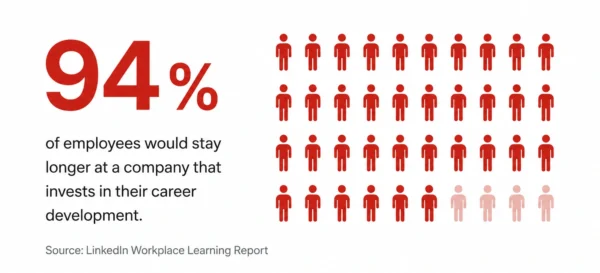
LinkedIn’s Workplace Learning Report found that 94% of employees would stay longer at a company that invests in their career development. This underscores the link between growth and retention. It benefits more than just engagement and motivation – reducing staff churn helps to reduce recruitment costs and improve business efficiency.
Consider offering structured development pathways, mentorship programmes, and learning budgets for your employees. Encourage managers to have regular development conversations rather than limiting them to annual reviews. Career clarity can increase commitment and everyday engagement, so staff work harder and deliver better outputs.
5. Support Health and Well-being
Burnout, stress, and financial pressure directly impact engagement levels. When employees are struggling with well-being challenges, they’re less focused and less productive. The World Health Organization estimates that depression and anxiety cost the global economy approximately $1 trillion per year in lost productivity. So supporting mental and physical health isn’t just a moral responsibility, it’s a commercial necessity.
The good news is that there are practical steps that organisations can take to support health and well-being. Introducing flexible working arrangements, wellness allowances, mental health resources, and financial wellbeing support can all help. When employees feel supported beyond their job description, engagement, loyalty, and performance all rise.
6. Empower Managers to Drive Engagement
Managers have a disproportionate influence on staff engagement outcomes. They interact with employees on a daily basis, which directly affects how people feel about their work. When their efforts and achievements are recognised by their line managers, engagement increases. But the converse is also true…
To improve employee engagement, you’ll need to equip managers with the skills and tools to lead effectively. Provide leadership training focused on coaching, feedback, and recognition. Encourage them to implement regular one-to-ones and meaningful conversations with direct reports.
7. Align Engagement with Business Goals
Engagement efforts are most effective when they’re linked to commercial outcomes. It’s vital for CEOs and HR leaders to connect engagement metrics to productivity, retention, customer satisfaction, and revenue performance. This is how you leverage engagement in a way that really moves the needle for your organisation.
Make engagement part of your strategic planning. Set measurable targets, track performance indicators, and treat engagement as a core driver of business success. For organisations focused on revenue, profitability, and sustainable growth, engagement is a powerful competitive advantage.
Increasing Employee Engagement In a Nutshell
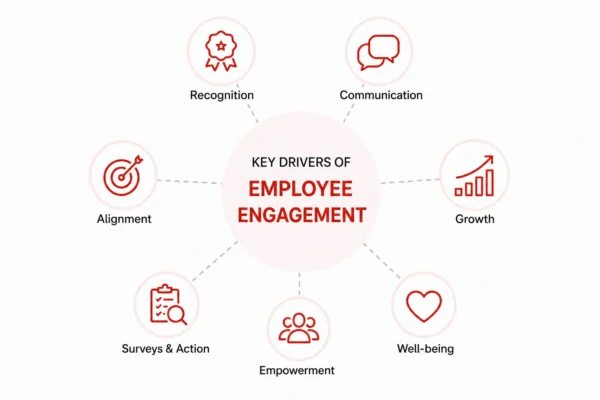
To improve employee engagement, organisations need to recognise achievements regularly, communicate clearly, gather frequent feedback, provide career development opportunities, and support employee wellbeing. When employees feel valued and supported, engagement rises, which drives higher productivity, stronger retention, and better business results.
Turning Strategy Into Action
Understanding how to improve employee engagement is the first step. Implementing a structured system to support it is where real transformation happens. It requires a clear strategy that connects recognition, communication, development, and well-being to measurable business outcomes.
This is where integrated platforms can make a difference. Gifteo enables HR teams and business leaders to embed engagement into everyday operations through:
- Real-time rewards and recognition tools
- Peer-to-peer appreciation features
- Automated milestone celebrations
- Employee surveys and feedback mechanisms
- Staff discounts and financial well-being support
By combining recognition, communication, and well-being in one employee engagement platform, businesses reduce administrative burden while strengthening motivation and retention.