





Who we are
Why Gifteo

For whom

Resources

Employee engagement platform » Rewards & Recognition » 7 Steps to Building a Successful Rewards & Recognition Program

7 Steps to Building a Successful Rewards & Recognition Program

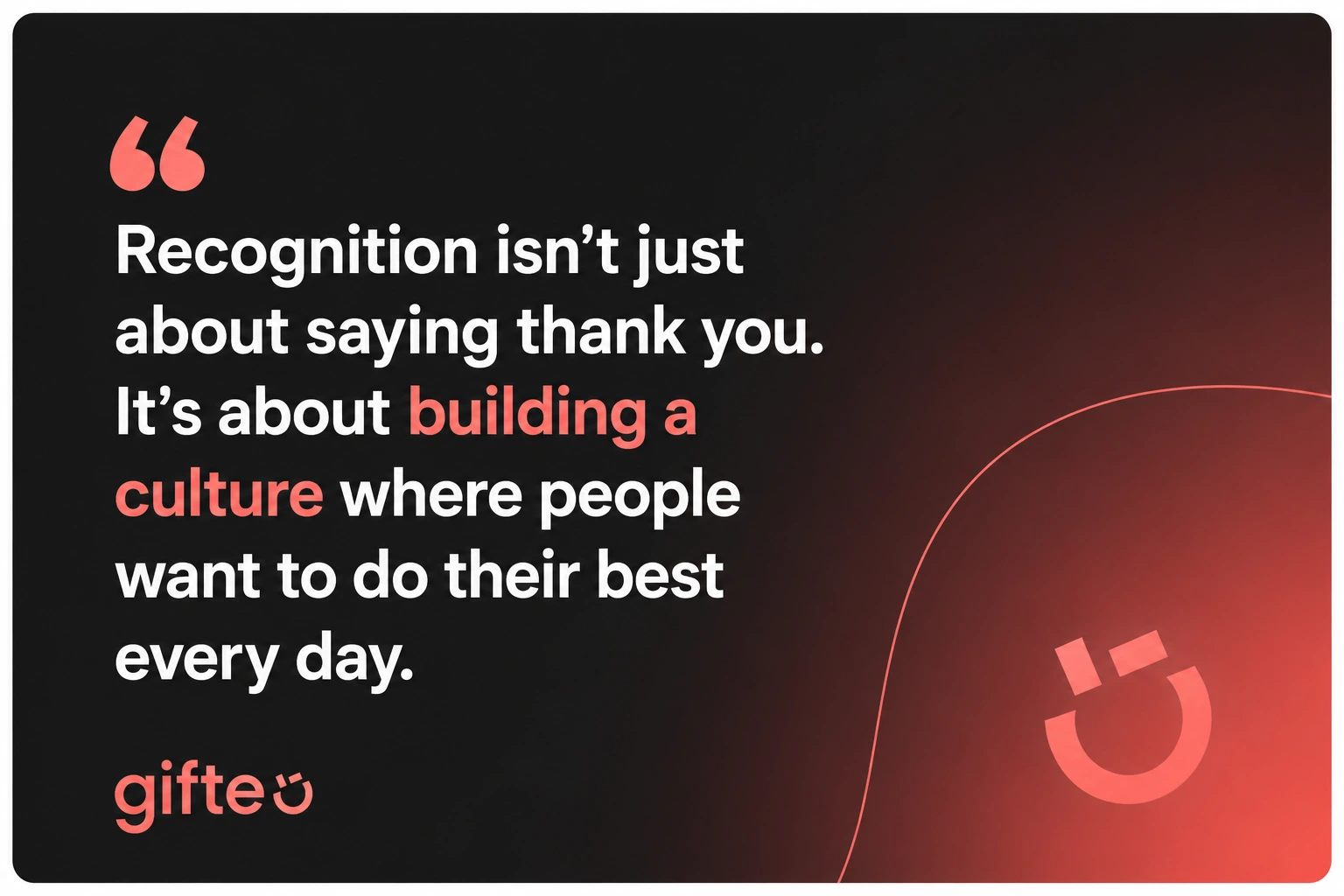
Many companies invest in employee recognition but struggle to maintain engagement over time. Creating a successful programme requires the right structure, meaningful rewards, and long-term consistency.
SUMMARY

Employee Recognition Needs Structure to Work

With a strategic approach, rewards programmes increase staff engagement, improve retention, and strengthen company culture. Unfortunately, many programmes fail because they’re inconsistent, poorly communicated, or disconnected from business goals. This can be a challenge for HR leaders and CEOs, because employees quickly lose interest when recognition feels generic, unfair, or infrequent. A successful approach needs structure, strategy, and the right tools behind it. Here’s a practical step-by-step guide to creating a rewards and recognition programme that motivates employees and delivers measurable business results…
Step 1: Define What You Want the Programme to Achieve

Start by identifying your goals. What business outcomes do you want your rewards and recognition programme to support? Without clear objectives, it’s difficult to design the right incentives and measure success. Ask yourself what challenge you are trying to solve. Are you looking to improve employee engagement? Reduce turnover? Increase productivity? Reinforce company values? Boost sales performance? By tying your programme to strategic goals, it becomes an impactful business driver rather than just a standalone HR initiative.

Step 2: Identify the Staff Behaviours You Want to Reward

Recognition should reinforce the specific actions and behaviours that contribute to business success. This means defining what “good performance” looks like within your organisation. Here are a few examples:

  • Going above and beyond for customers
  • Demonstrating company values
  • Exceeding KPIs or sales targets
  • Supporting colleagues and teamwork
  • Innovating or improving processes
  • Reaching service milestones

Defining clear criteria ensures that recognition feels fair and consistent. It helps employees to understand exactly what behaviours are being rewarded and why the organisation values them.

Step 3: Choose Rewards Employees Actually Care About

A common mistake we see companies make is assuming that everyone is motivated by the same type of reward. In reality, employees value different things and something that inspires one person won’t appeal to another. Lifestyles, career stages, and personal preferences can all influence that types of rewards that motivate people, so consider offering a mix:

  • Gift cards
  • Extra annual leave
  • Experiences or travel
  • Wellness perks
  • Professional development opportunities
  • Charity donations
  • Workplace privileges

Offering a wide variety of reward options makes recognition more meaningful, which increases its perceived value. The more personalised the reward feels, the stronger the motivational impact.


Book a demo to learn how Gifteo can help

Step 4: Build Staff Recognition into Everyday Culture

Employee recognition programmes work best when they’re frequent and embedded into daily working life (not reserved solely for annual reviews or formal award ceremonies). Encourage managers to recognise great work regularly and in real time. Promoting peer-to-peer recognition can also help create a culture where appreciation becomes part of everyday interactions. When recognition is consistent, employees are more likely to feel valued and stay engaged in their work. Frequent small moments of appreciation often have more impact than infrequent large rewards. Create a regular cadence of recognition by embedding them into existing workflows (such as Slack channels or Microsoft Teams broadcasts) and using automated tools to ensure consistency.

Step 5: Make the Programme Easy to Understand and Access

Even the best-designed recognition programme can fail if employees don’t understand how it works. Clear communication is essential from day one. Make sure you explain:

  • What the programme is
  • Why it exists
  • What behaviours are rewarded
  • How employees can earn recognition
  • What rewards are available
  • How and when rewards are delivered

Keep the process simple. If recognition feels complicated or difficult to do, participation will drop. Using a one-stop platform like Gifteo makes it easy to manage and access everything in one place.

Step 6: Train Managers to Use It Well

Managers play a critical role in the success of any rewards and recognition programme. If leaders fail to recognise people consistently, the programme quickly loses credibility. Train your managers and team leaders on:

  • When and how to recognise employees
  • How to link recognition to specific behaviours
  • How to avoid unconscious bias, favouritism, or inconsistency
  • How to deliver meaningful praise

Strong manager buy-in is often the difference between a programme that thrives and one that fades away.

Step 7: Measure, Review, and Optimise

A rewards and recognition programme should evolve over time based on employee feedback and performance data. To ensure you have the necessary information to make data-based decisions, track metrics such as:

  • Employee engagement scores
  • Participation rates
  • Reward redemption rates
  • Staff retention figures
  • Productivity levels
  • Employee feedback on the programme

Use this data to identify what’s working and where improvements are needed. The most effective programmes are continuously refined rather than left unchanged. This will ensure you get the best possible results from your rewards programme.

Geoffrey Chapuy

Meet Gifteo : recognition and rewards, made effortless. Rewarding your teams has never been this easy.