





How the right reward scheme helps organisations retain talent, improve engagement, and build long-term loyalty.
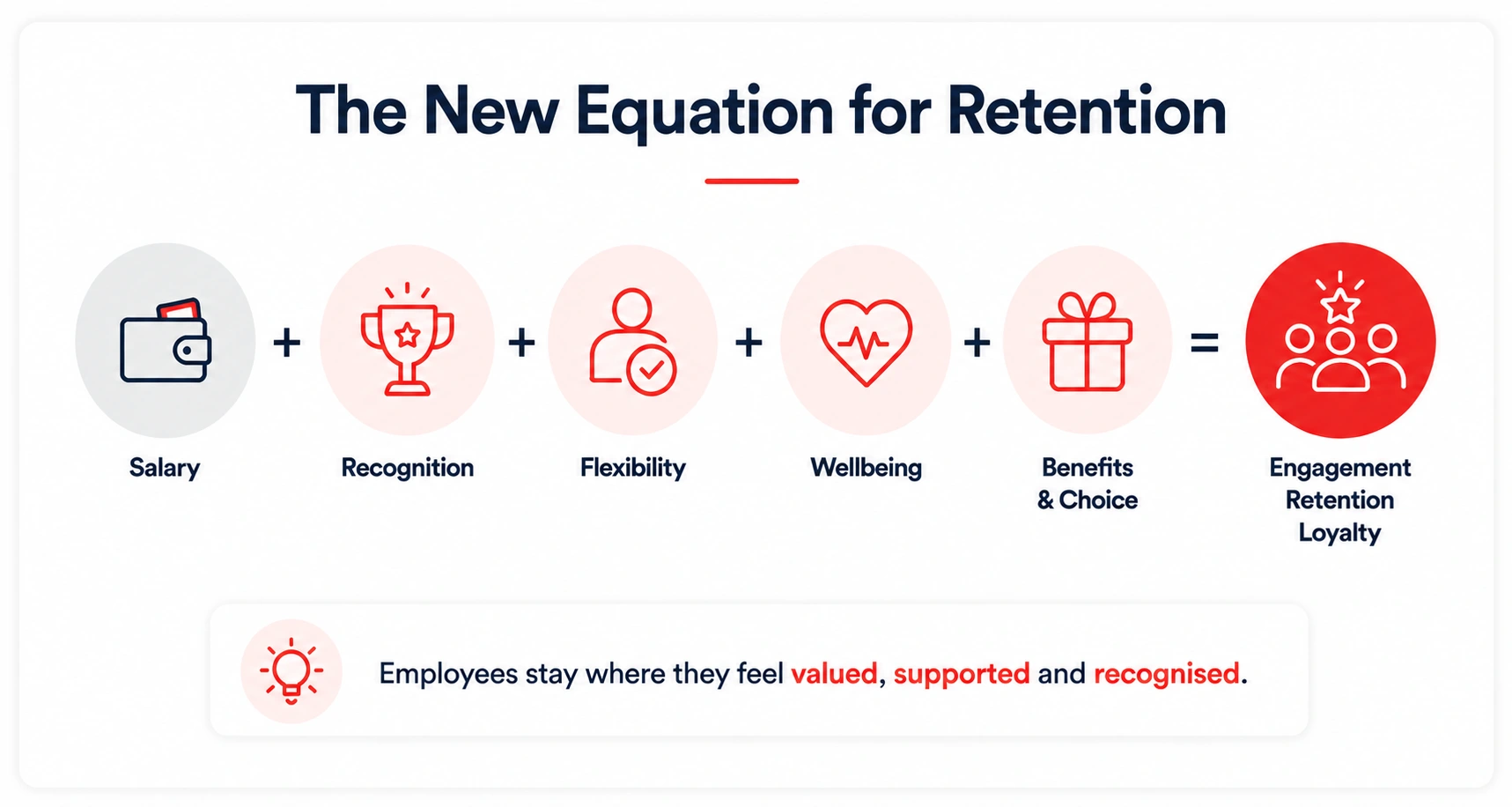
Employee reward schemes have evolved significantly over the past decade. While salary remains an important factor when choosing an employer, it’s no longer enough to retain talented people on its own. Employees increasingly expect recognition, flexibility, wellbeing support, and benefits that reflect their individual needs.
The most successful reward schemes go beyond occasional bonuses or one-off incentives. They create an employee experience that encourages people to stay, contribute, and grow with the organisation. This guide explores the types of reward schemes that genuinely improve retention and how businesses can build a programme that delivers lasting value.
Why Employee Reward Schemes Matter
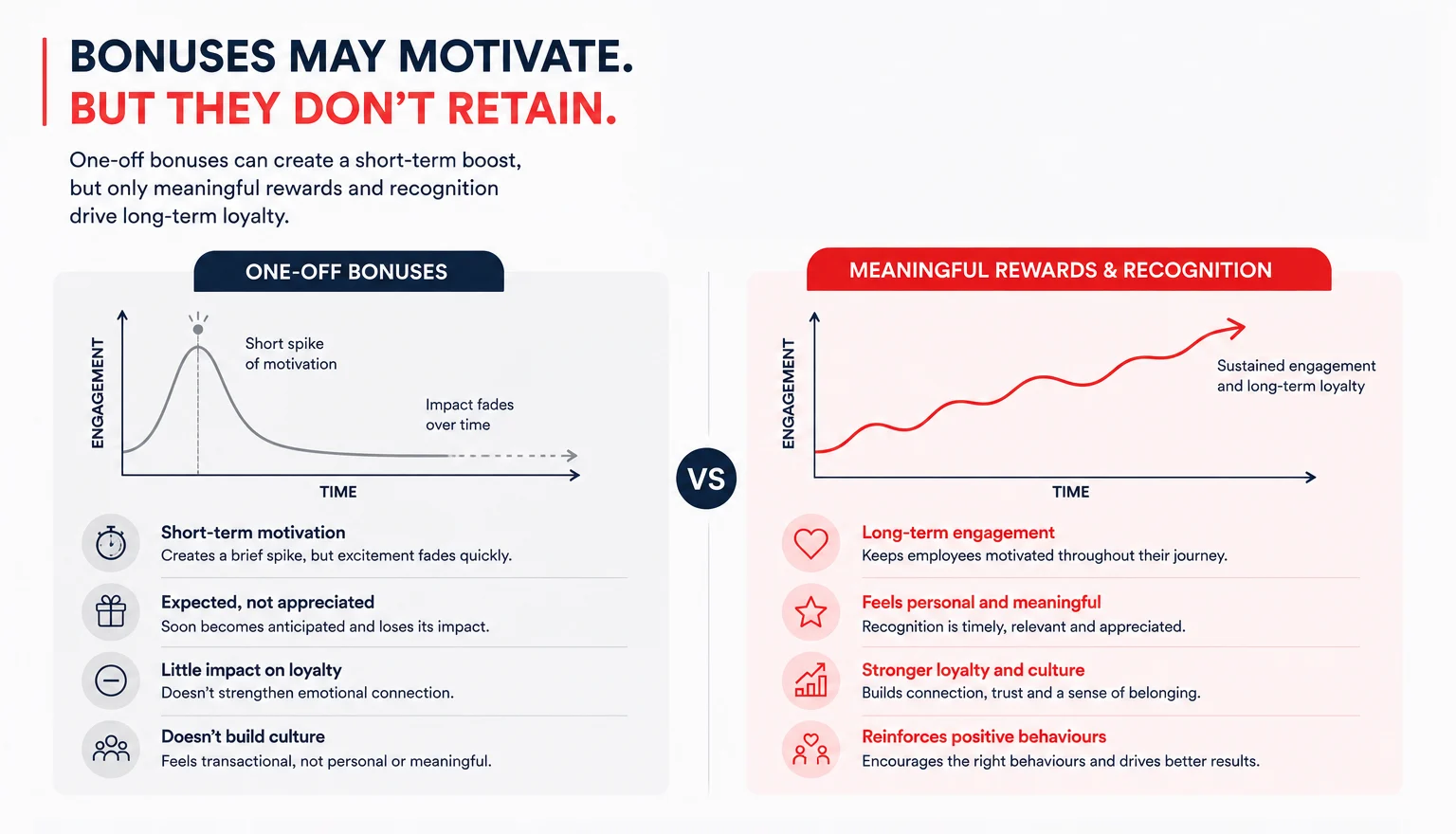
Employee turnover is expensive. Replacing experienced employees involves recruitment costs, onboarding, training, and lost productivity, making retention a strategic priority for organisations of every size.
A well-designed employee reward scheme helps employees feel valued throughout their journey with the business. Recognition for achievements, meaningful rewards, and access to relevant benefits all contribute to a stronger sense of belonging.
Reward schemes also reinforce positive behaviours, strengthen company culture, and support employee engagement. When employees know their contributions will be recognised, they’re often more motivated to perform at their best.
Rather than viewing rewards as an expense, many organisations now see them as an investment in long-term retention and business performance.
What Employees Actually Value
One of the biggest misconceptions is that employees are motivated by money alone.
While financial rewards certainly have their place, research consistently shows that employees also value flexibility, recognition, career development, and wellbeing. A reward scheme that combines several of these elements is far more likely to meet the needs of a diverse workforce.
Employees increasingly appreciate rewards that offer genuine choice. Different generations, lifestyles, and personal circumstances mean there is no single reward that appeals to everyone.
The most effective schemes focus on giving employees flexibility rather than prescribing identical rewards for every individual.
Reward Schemes That Improve Retention
Not every reward has the same impact on employee loyalty. The schemes that consistently deliver results are those that combine meaningful recognition with rewards employees genuinely value.
Flexible Gift Cards
Gift cards remain one of the most popular employee rewards because they allow employees to choose something relevant to their own interests.
Whether employees prefer shopping, dining, travel, entertainment, or home improvement, flexibility increases the perceived value of the reward while reducing administration for employers.
Employee Discount Platforms
Access to everyday savings provides value throughout the year rather than only during recognition moments.
Discounts on groceries, travel, retail, technology, restaurants, and entertainment help employees manage the rising cost of living while increasing the perceived value of their overall benefits package.
Unlike one-off rewards, these schemes continue supporting employees long after they have been introduced.
Recognition Programmes
Recognition remains one of the strongest drivers of engagement and retention.
Employees who regularly receive meaningful recognition are more likely to feel connected to their organisation and motivated to continue performing well.
Recognition works particularly well when it comes from multiple sources, including managers, senior leaders, and colleagues through peer-to-peer recognition.
Wellbeing Benefits
Employee wellbeing has become an essential part of modern reward strategies.
Many organisations now include wellbeing allowances, fitness memberships, mental health support, financial wellbeing resources, or employee assistance programmes within their reward offering.
Supporting wellbeing demonstrates that employers care about employees beyond their day-to-day performance.
Lifestyle Benefits
Lifestyle benefits provide employees with greater flexibility in how they use their rewards.
Popular options include:
- travel discounts
- technology retailers
- cinema and entertainment
- family attractions
- dining
- home and garden retailers
- seasonal offers
Providing access to a broad marketplace of benefits ensures rewards remain relevant to employees with different interests and priorities.
Long Service Awards
Recognising employee loyalty remains an important part of any reward strategy.
Celebrating milestones such as five, ten, or twenty years of service reinforces appreciation while encouraging long-term commitment.
Modern long service awards increasingly focus on employee choice rather than traditional gifts, making recognition feel more personal and meaningful.
Why One-Off Bonuses Rarely Improve Retention
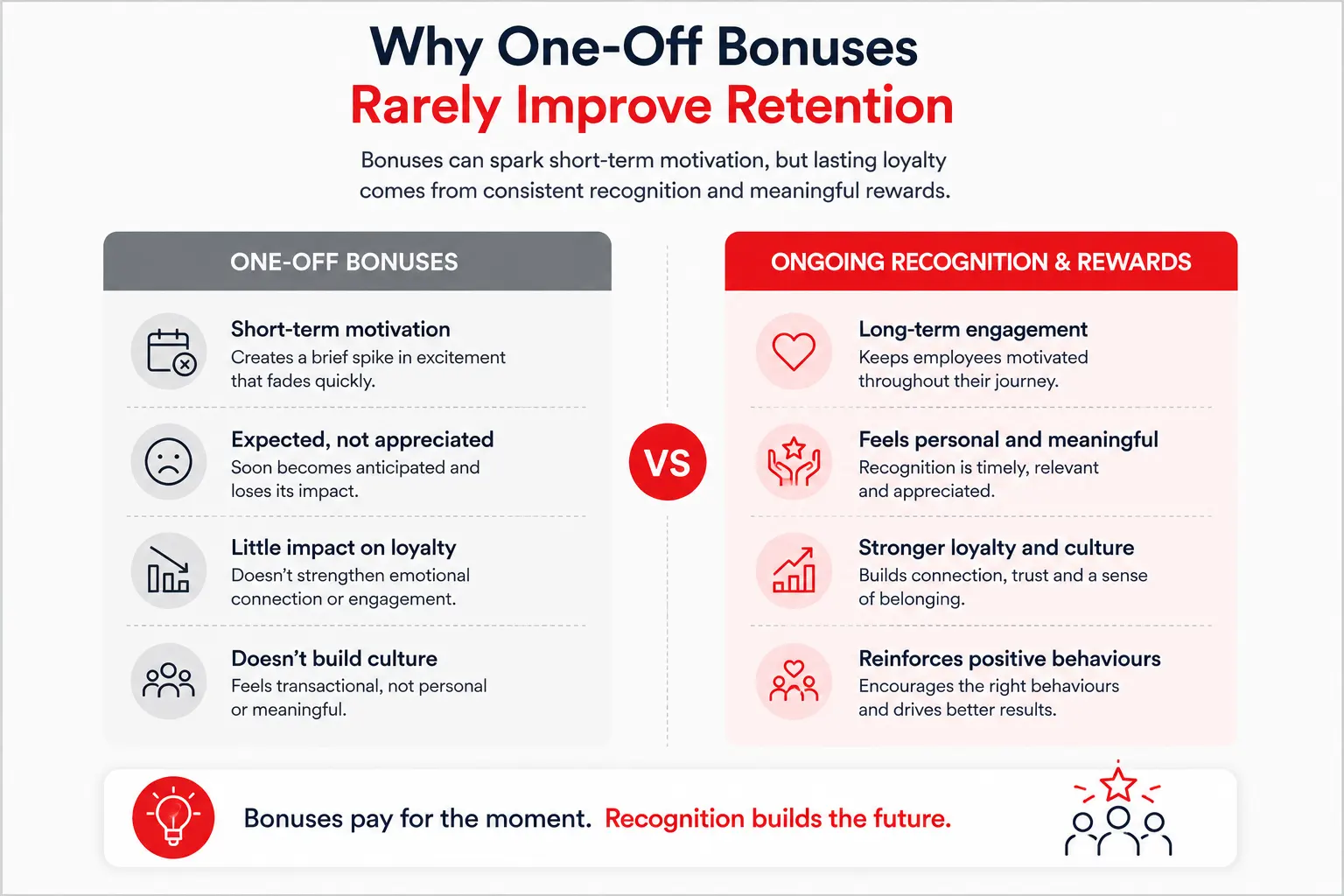
Financial bonuses can generate short-term motivation, but their impact often fades quickly.
Without regular recognition or meaningful employee benefits, bonuses become expected rather than appreciated. Employees may value the payment in the moment, but it does little to strengthen long-term engagement or reinforce organisational culture.
This doesn’t mean bonuses have no place in a reward strategy. Instead, they should complement a broader programme that recognises employees consistently throughout the year.
Organisations that rely exclusively on financial incentives often overlook the emotional aspects of employee loyalty, such as feeling recognised, appreciated, and connected to the workplace.
How to Build a Reward Scheme That Employees Value
The most effective employee reward schemes share several characteristics.
First, they offer flexibility rather than assuming every employee values the same reward.
Second, they recognise employees regularly instead of waiting for annual reviews or company events.
Third, they align rewards with company values and business objectives, ensuring recognition reinforces the behaviours organisations want to encourage.
Finally, they are easy to access. Employees are far more likely to engage with rewards when they are available through a simple digital platform that removes unnecessary administration.
The goal isn’t simply to distribute rewards. It’s to create an employee experience that encourages people to stay with the organisation for the long term.
Measuring the Success of Your Reward Scheme
Introducing a reward scheme is only the beginning.
To understand whether it is achieving its objectives, organisations should regularly monitor key indicators such as:
- employee retention
- engagement survey results
- reward participation
- platform usage
- employee feedback
- recognition activity
- absenteeism
- voluntary turnover
Tracking these measures helps organisations refine their reward strategy while demonstrating the return on investment of employee recognition.
How Gifteo Helps Organisations Build Effective Employee Reward Schemes
An effective reward scheme should be simple to manage, flexible for employees, and scalable as your organisation grows.
Gifteo brings employee rewards, recognition, wellbeing, communication, and exclusive discounts together in one employee engagement platform.
Rather than relying on disconnected initiatives, organisations can automate recognition, celebrate milestones, provide employees with meaningful rewards, and give teams access to everyday savings through a single platform.
With flexible gift cards, employee discounts, wellbeing benefits, peer-to-peer recognition, and integrations with Microsoft Teams and Slack, Gifteo helps organisations build reward schemes that support engagement, strengthen loyalty, and improve retention over the long term.