





Employee rewards that drive motivation, engagement, and long-term performance.
The right types of employee rewards can significantly increase engagement, productivity, and retention. Motivated staff don’t just work harder, they create better results (and a positive culture) across the entire organisation. For HR leaders and CEOs, implementing a smart rewards strategy can reinforce positive behaviours, celebrate achievements, and show team members that their contributions are valued.
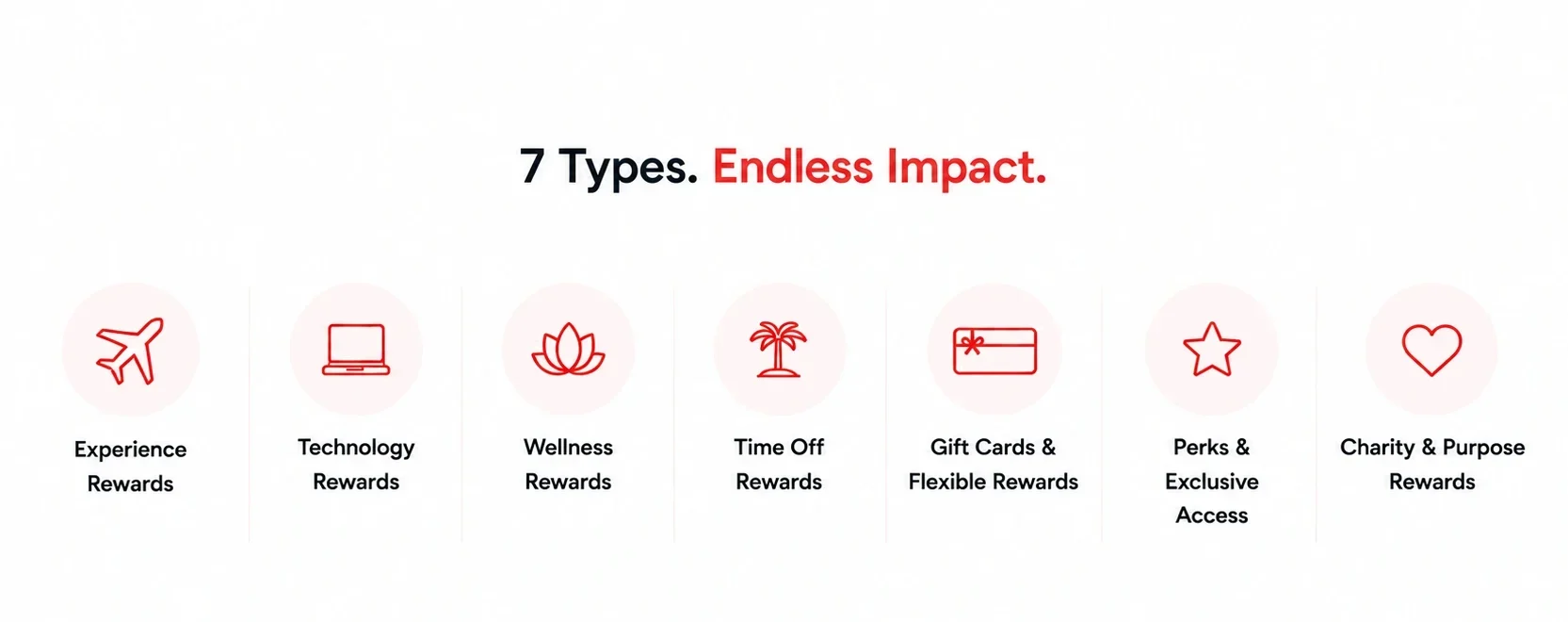
But which types of rewards do employees really value? Below are seven of the most effective options for motivating teams and reinforcing high performance.

1. Experience Rewards
Experience-based rewards consistently rank among the most motivating incentives for employees. A weekend getaway, travel voucher, or hotel stay allows employees to create lasting memories rather than simply receiving a physical item.
According to a study from the Incentive Research Foundation, experiential rewards are often more memorable and motivating because they create emotional value. For high performers, offering a travel experience can feel like a meaningful celebration of their achievements.
These types of rewards for employees work particularly well when they’re linked to milestone achievements, sales incentives, or exceptional project contributions. Experiences like exotic trips and luxury staycations also generate excitement within teams, encouraging others to strive for similar recognition.
2. Technology Rewards
Tech rewards such as smartphones, tablets, or smartwatches are consistently popular among employees. Devices like the newest iPhone, iPad, or Samsung Galaxy products are high-value items that employees may already want but hesitate to purchase themselves.
Rewards like these are some of the most widely used incentive types in corporate recognition programmes. Electronics and technology consistently rank among the most desired reward categories for staff. They can be a huge motivator that drives more discretionary effort across your workforce.
Providing access to premium tech rewards can be particularly effective in sales teams or performance-driven environments where tangible prizes reinforce competitive achievement. The key is identifying the latest releases from big brands that your staff will truly go above and beyond to own.
3. Wellness Rewards
Wellness rewards are ideal for organisations that want to recognise the importance of work-life balance. Spa days, massage vouchers, or wellness retreats support employee well-being by enabling them to recharge and recover. They’re especially impactful (and valued) after demanding work periods such as completing a large, complex, or time-sensitive project.
Supporting well-being is increasingly important as workplace stress rises. The WHO estimates that depression and anxiety cost the global economy approximately $1 trillion each year in lost productivity. Providing wellness-themed rewards is a fantastic way to support your staff and help them maintain a healthy work-life balance.
Wellness rewards can also reinforce a workplace culture that prioritises health. They demonstrate that your company cares about its staff beyond their job performance and can aid employer branding for recruitment. Offering spa days, gym memberships, or Lifestyle Spending Accounts (which allow employees to choose what they spend money on) can all improve engagement and long-term productivity.
Book a demo to learn how Gifteo can help
4. Additional Time Off
Time off can be one of the most valuable rewards an employer can offer. Extra paid leave, a long weekend, or flexible days off give staff the chance to rest, travel, or spend time with family. It can be something they value even more than financial incentives.
Non-monetary benefits such as flexible time off can be particularly motivating because they impact quality of life. There’s something especially satisfying about enjoying a relaxed morning coffee or spending the day with family on what’s supposed to be a workday. It’s no wonder that employees place such a high value on time-based rewards.
Offering extra leave as a reward also helps reduce burnout while reinforcing appreciation for exceptional effort. It doesn’t have to be long – a single day, half day, or even a few hours (to allow for a late start) can all make the difference.
5. Gift Cards and Flexible Spending Rewards
Gift cards remain one of the most popular and versatile employee rewards. They give staff the freedom to choose how they want to spend their incentive, which can make them more personal and practical.
While gift cards and vouchers can sometimes feel like a cop out, they’re actually hugely valued. Research shows that 70% of employees prefer rewards that allow them to choose their own incentive. Having flexibility often increases satisfaction because your employees can tailor rewards to their individual preferences.
Gift cards typically work well for everyday recognition moments. From meeting targets to celebrating project completions, they’re a popular choice that’s easy to distribute and immediately valuable.
6. Exclusive Workplace Perks
Sometimes the most motivating rewards are simple but symbolic. Exclusive workplace perks such as a VIP parking space, priority desk location, or executive lunch can create recognition moments that employees value.
These types of rewards tap into status and visibility rather than financial value. When a reward is highly visible within the workplace, it reinforces recognition publicly and encourages positive competition.
While these types of rewards for employees may seem small, they can be extremely motivating when used creatively and consistently. Custom incentives like these also cost very little to implement, making them an attractive option for businesses of all sizes.
7. Charitable Donations and Purpose-Driven Rewards
Purpose-driven rewards allow employees to donate to a charity of their choice as part of their recognition. This approach particularly appeals to employees who value social impact and corporate responsibility.
Offering charitable rewards reinforces organisational values while giving staff the opportunity to contribute to causes they care about. They can be especially effective when tied to company-wide initiatives, such as sustainability goals or community impact programmes.
Paying rewards forward to charities and non-profit organisations (instead of keeping them for yourself) can be hugely gratifying. For staff who aren’t motivated by financial gain, charity rewards are an ideal alternative.
The Best Types of Rewards for Employees
The most effective types of employee rewards include travel experiences, technology gifts, wellness experiences, additional time off, gift cards, exclusive workplace perks, and charitable rewards. Offering a mix of personalised incentives ensures employees feel recognised in ways that genuinely motivate them.
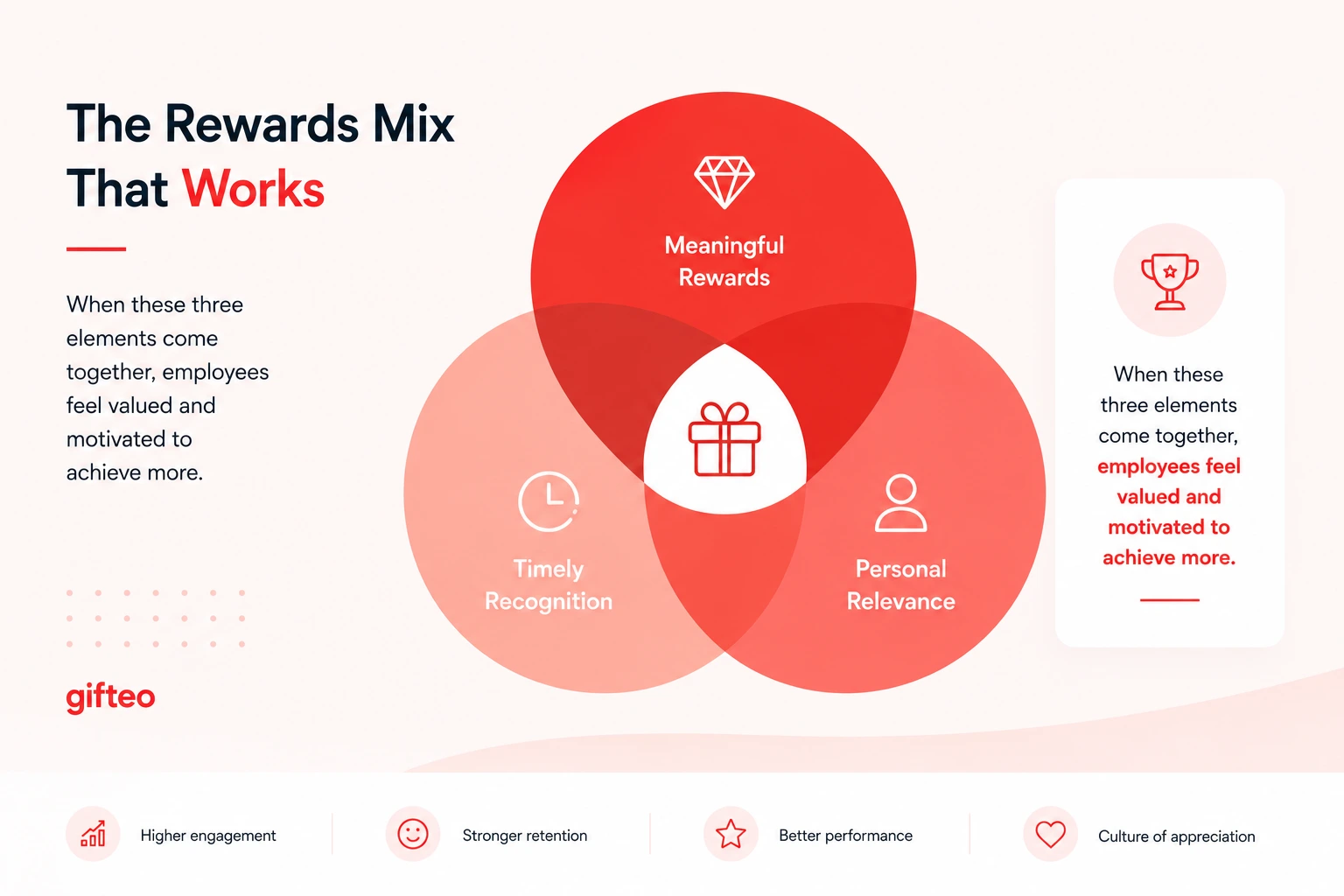
But understanding what motivates teams is only the first step. The real challenge for HR leaders and CEOs is delivering those rewards consistently, fairly, and without creating unnecessary administrative work.
This is where modern employee engagement platforms like Gifteo can help. We enable organisations to provide a wide variety of rewards, including travel experiences, electronics, gift cards, and personalised incentives, through one centralised platform. Employees can choose rewards that suit their preferences, making recognition more meaningful.
For businesses looking to increase motivation, reduce turnover, and improve performance, Gifteo makes it easy to implement an effective employee rewards strategy.
Geoffrey Chapuy
Meet Gifteo : recognition and rewards, made effortless. Rewarding your teams has never been this easy.
Watch this