





Reward strategies that strengthen engagement, performance, and retention.
Knowing how to reward employees effectively is crucial for high-performing organisations. It’s a core tenet of improving engagement, boosting productivity, and retaining top talent. While many businesses offer rewards of some type, not all of their approaches deliver meaningful results. The differentiator is how well rewards align with employee preferences, company goals, and everyday processes.
So, how can HR teams and CEOs create reward strategies that motivate employees, without adding unnecessary cost or complexity? In this guide, you’ll discover how to do just this, so that your employee rewards become a powerful driver of business performance.
Why Getting Employee Rewards Right Really Matters
Employee rewards directly impact staff motivation, engagement, and retention. When your employees feel appreciated, they’re more likely to stay committed to their roles and deliver better outputs. Research shows that employees who feel recognised are more engaged and productive, while those who don’t are significantly more likely to leave their organisation. Rewards are a critical tool for combatting this, reducing turnover and improving performance.
For businesses, the benefits of getting rewards and recognition right include:
- Higher staff productivity and output
- Improved employee engagement
- Better retention rates
- Stronger workplace culture
- Increased revenue and profitability
You can use employee rewards to recognise and reinforce positive behaviours, achievements, and contributions. This encourages staff to continue performing at a high level by showing that their efforts are valued. But an effective approach requires more than occasional gestures – it should be a structured and consistent part of your overall employee engagement strategy. Here’s how to reward staff in a way that drives motivation, performance, and results…
1. Recognise Achievements in Real Time
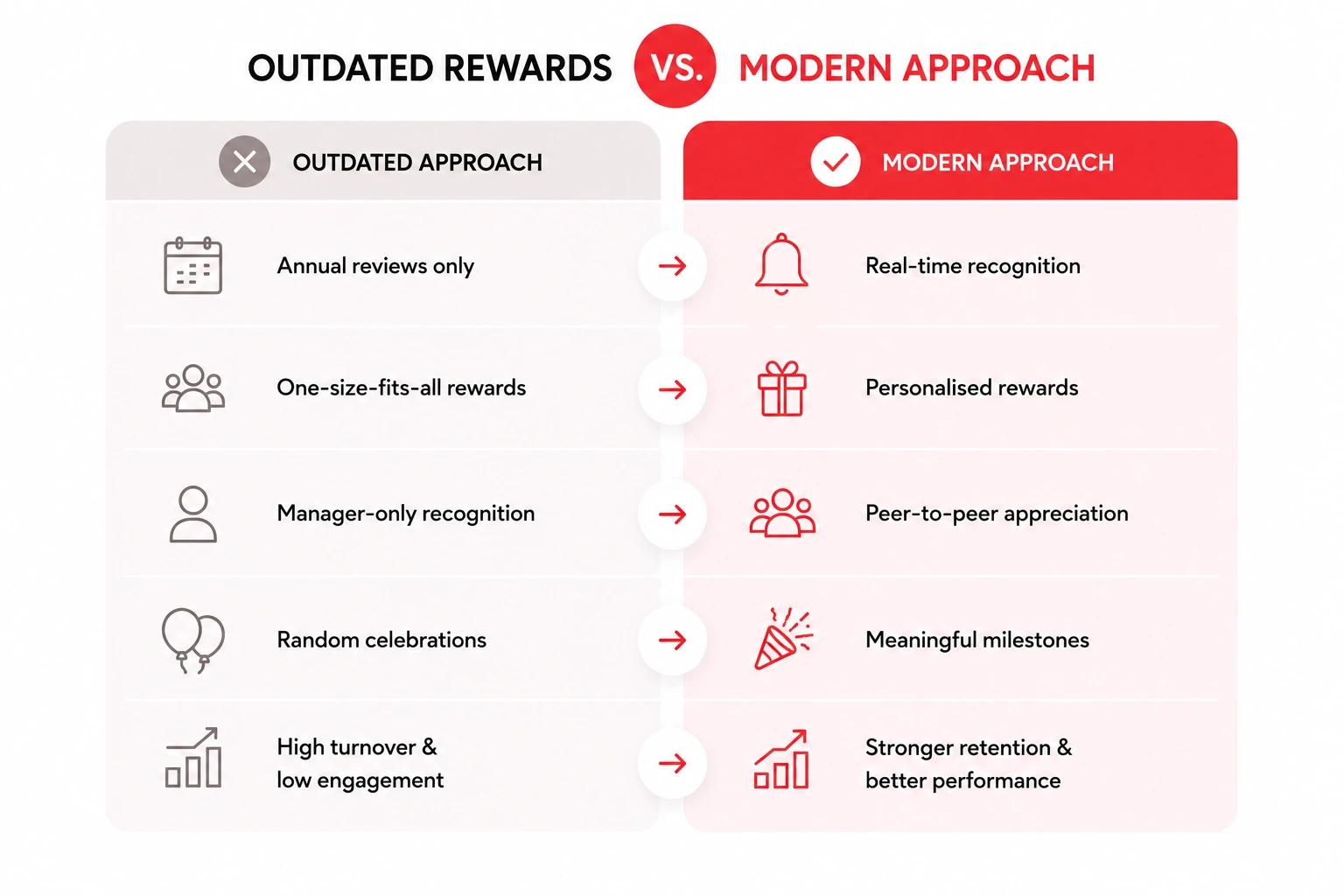
One of the most effective ways to reward employees is through timely recognition. Many organisations make the mistake of waiting for annual reviews or quarterly meetings. However, this delayed approach can reduce the impact of recognition.
When employees are acknowledged immediately after a success (whether it’s hitting a target, completing a project, or supporting a colleague), the reward feels more meaningful. Using real-time recognition also reinforces the behaviours you want to see repeated across the organisation. It’s a simple shift that has a huge impact on the effectiveness of rewards.
2. Offer a Mix of Reward Types
Not all employees are motivated by the same incentives. Some will value financial rewards, while others will prefer experiences, flexibility, or development opportunities. A well-rounded reward strategy should include:
- Monetary rewards (bonuses, gift cards)
- Non-financial rewards (extra leave, experiences)
- Recognition (public praise, awards)
- Development opportunities (training, mentorship)
Offering varied rewards like these ensures that they’re relevant and motivating for a diverse workforce. Organisations typically get better results from more staff when approaching it in this way.
3. Personalise Rewards Where Possible
Generic rewards can feel impersonal and lose their impact over time. Personalisation is crucial to making rewards meaningful. It shows that staff are valued as unique individuals (not just for their output).
For example, one employee might appreciate a spa day, while another might prefer a training course or extra time off. Giving employees the ability to choose their rewards increases satisfaction and engagement. It means they get to benefit from something they truly value.
4. Align Rewards with Business Goals
To really move the needle, rewards should reinforce the behaviours that drive your organisation forward. This means linking recognition to specific outcomes such as performance targets, customer satisfaction, innovation, or teamwork.
When staff understand how their actions contribute to business success (and see those actions rewarded), they’re more likely to stay focused and motivated. This type of clear alignment also ensures fairness and consistency across the organisation.