





A practical framework for creating an employee recognition programme that delivers lasting business results.
An effective employee recognition programme does more than reward great work. It creates a culture where employees feel appreciated for their contributions and motivated to continue performing at their best. When recognition becomes part of everyday working life, organisations benefit from stronger engagement, improved retention, and a more positive workplace culture.
Whether you’re introducing recognition for the first time or improving an existing initiative, building a successful programme requires more than simply choosing rewards. It starts with clear objectives, meaningful recognition, and a consistent approach that employees understand and trust.
Why Employee Recognition Programmes Matter
Recognition has become a key part of the employee experience. In a competitive labour market, organisations are looking beyond salary to retain talented people and create workplaces where employees want to stay.
Employees who feel recognised are generally more engaged, more motivated, and more likely to remain with their employer. Recognition also reinforces the behaviours and values that contribute to long-term business success.
An effective employee recognition programme helps organisations:
- improve employee engagement
- increase motivation and morale
- strengthen company culture
- support employee retention
- reinforce organisational values
- improve the overall employee experience
Rather than being treated as a one-off initiative, recognition should become an ongoing part of how employees are supported throughout their careers.
Step 1: Define the Purpose of Your Programme
Before selecting rewards or introducing new technology, identify exactly what you want your recognition programme to achieve.
Different organisations have different priorities. Some want to improve employee engagement, while others focus on reducing turnover, reinforcing company values, or supporting a new employee value proposition.
Setting clear objectives gives your programme direction and makes it easier to measure its success over time.
Ask yourself questions such as:
- What behaviours do we want to encourage?
- What business challenges are we trying to solve?
- How will we measure success?
- What does meaningful recognition look like for our employees?
Clear objectives should influence every decision that follows, from the type of recognition you provide to the way success is measured.
Step 2: Decide What Employees Should Be Recognised For
One of the most common mistakes organisations make is recognising only exceptional performance.
While major achievements deserve recognition, employees should also be acknowledged for the everyday behaviours that contribute to a positive workplace.
For example, your programme might recognise:
- collaboration across teams
- innovation and creative thinking
- excellent customer service
- demonstrating company values
- mentoring colleagues
- project success
- personal development
- work anniversaries and long service
- peer support
When employees understand what is being recognised, the programme feels fair, transparent, and aligned with organisational goals.
Step 3: Choose Recognition That Feels Meaningful
Recognition doesn’t always need to involve expensive rewards.
In many cases, sincere appreciation delivered at the right time has a greater impact than a costly gift given months later.
That said, combining recognition with flexible rewards often creates an even stronger employee experience.
Popular reward options include:
- gift cards
- experience days
- wellbeing benefits
- additional annual leave
- charitable donations
- personalised gifts
- lifestyle discounts
- learning and development opportunities
Providing employees with choice is particularly important. A reward that feels meaningful to one employee may have little value to another. Flexible reward options help ensure recognition feels personal rather than generic.
Step 4: Make Recognition Frequent, Not Occasional
Many organisations still rely on annual awards ceremonies or end-of-year celebrations.
Although these events have value, they shouldn’t be the only opportunities employees have to receive recognition.
Frequent recognition creates stronger habits, reinforces positive behaviours, and keeps employees engaged throughout the year.
Managers should be encouraged to recognise achievements as they happen, while peer-to-peer recognition gives colleagues the opportunity to celebrate one another’s contributions.
Recognising employees regularly also helps prevent appreciation from becoming associated only with exceptional performance.
Step 5: Encourage Recognition Across the Entire Organisation
Recognition shouldn’t come exclusively from senior leaders.
Employees often place just as much value on appreciation from their manager, teammates, or colleagues in other departments.
Creating multiple opportunities for recognition helps build a culture where appreciation becomes everyone’s responsibility.
Many organisations successfully combine:
- manager recognition
- peer-to-peer recognition
- leadership recognition
- milestone celebrations
- company-wide recognition announcements
Making recognition visible also reinforces positive behaviours and encourages wider participation across the organisation.
Step 6: Use Technology to Keep Recognition Consistent
As organisations grow, manual recognition programmes become increasingly difficult to manage.
Important milestones can easily be missed, rewards become inconsistent, and HR teams spend unnecessary time administering the programme.
Modern employee recognition platforms simplify the process by automating key activities such as:
- birthdays
- work anniversaries
- long service awards
- reward distribution
- peer recognition
- manager approvals
- employee communications
Automation ensures every employee receives consistent recognition while allowing HR teams to focus on creating a better employee experience rather than managing spreadsheets.
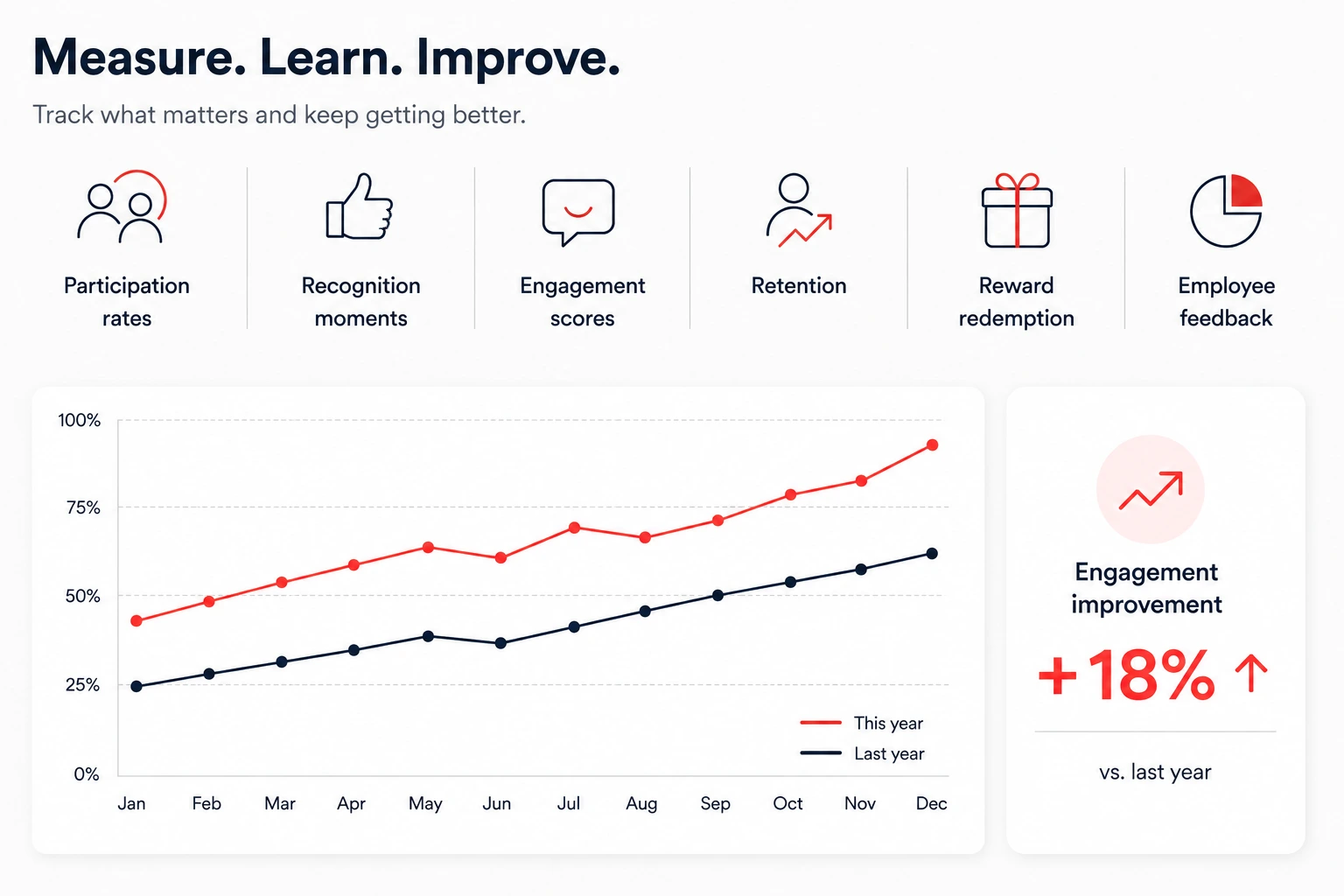
Step 7: Measure the Success of Your Programme
Like any business initiative, an employee recognition programme should evolve over time.
Measuring results helps identify what’s working, where improvements are needed, and whether the programme is delivering value for both employees and the organisation.
Useful metrics include:
- participation rates
- number of recognition moments shared
- employee engagement survey results
- employee retention
- absenteeism
- employee feedback
- reward redemption rates
Regularly reviewing these insights allows organisations to adapt their programme as employee expectations change.

Common Mistakes to Avoid
Even well-intentioned recognition programmes can lose momentum if they aren’t carefully planned.
One of the biggest mistakes is recognising employees too infrequently. Waiting until annual reviews or company events means many valuable opportunities to reinforce positive behaviours are missed.
Another common issue is relying solely on managers. Encouraging peer-to-peer recognition creates a more inclusive culture where appreciation becomes part of everyday work.
Generic rewards can also reduce the impact of recognition. Employees are far more likely to value rewards they have chosen themselves than gifts selected on their behalf.
Finally, organisations should avoid launching a recognition programme without clear objectives or ongoing communication. Employees need to understand why recognition matters, how it works, and what behaviours are being celebrated.
Best Practices for a Successful Recognition Programme
The most successful programmes share several common characteristics.
They recognise employees regularly rather than occasionally, offer rewards that employees genuinely value, and make recognition visible across the organisation. They are also simple to use, supported by leadership, and aligned with company values.
Perhaps most importantly, they evolve over time.
Employee expectations change, organisations grow, and workplace culture develops. Reviewing your recognition programme regularly helps ensure it continues to support both business objectives and employee needs.
How Gifteo Helps Build Employee Recognition Programmes
Building a successful employee recognition programme is much easier when recognition, rewards, and communication are managed in one place.
Gifteo enables organisations to automate milestone recognition, celebrate achievements in real time, and give employees access to rewards that reflect their individual preferences. Managers can recognise great work more consistently, while employees can celebrate one another through peer-to-peer recognition.
The platform also combines employee rewards, wellbeing benefits, communication tools, and recognition into a single employee engagement solution. This makes it easier to create a recognition programme that feels consistent, scalable, and engaging as your organisation grows.
Rather than treating recognition as an occasional initiative, Gifteo helps businesses build a culture where appreciation becomes part of everyday working life.