





How employee recognition improves engagement, retention, and long-term business performance.
Many business leaders don’t equate employee recognition with a revenue-driving investment. But in reality, organisations that fail to recognise employees often pay the price through low engagement, poor productivity, and expensive staff turnover. For UK employers, the true cost of their workforces feeling under-recognised can be substantial.
In this guide, we break down the return on investment (ROI) of employee recognition for businesses and outline why recognition should be treated as a strategic move (rather than an optional ‘nice to have’).

What is the ROI of Employee Recognition?
The ROI of employee recognition comes from improved productivity, lower staff turnover, and reduced absenteeism, all of which contribute to more revenue and higher profitability. The return typically outweighs the cost by a significant amount as it improves workforce performance and reduces expensive people-related inefficiencies.
Understanding the ROI of employee recognition is essential for HR leaders and CEOs. If you’re evaluating whether to invest in a recognition platform or programme, then the evidence speaks for itself: when employees feel valued, business results improve.
Why Employee Recognition Delivers Strong ROI
Employee recognition works because it reinforces positive behaviours and increases emotional commitment to work. When employees know their effort is noticed and appreciated, they are more motivated to maintain high standards. This leads to greater outputs and increased productivity.
Recognition also strengthens the psychological connection to the organisation. Team members who feel valued are more likely to care about outcomes, contribute innovative ideas, and go beyond doing the minimum. This translates into measurable commercial benefits across several key business areas…
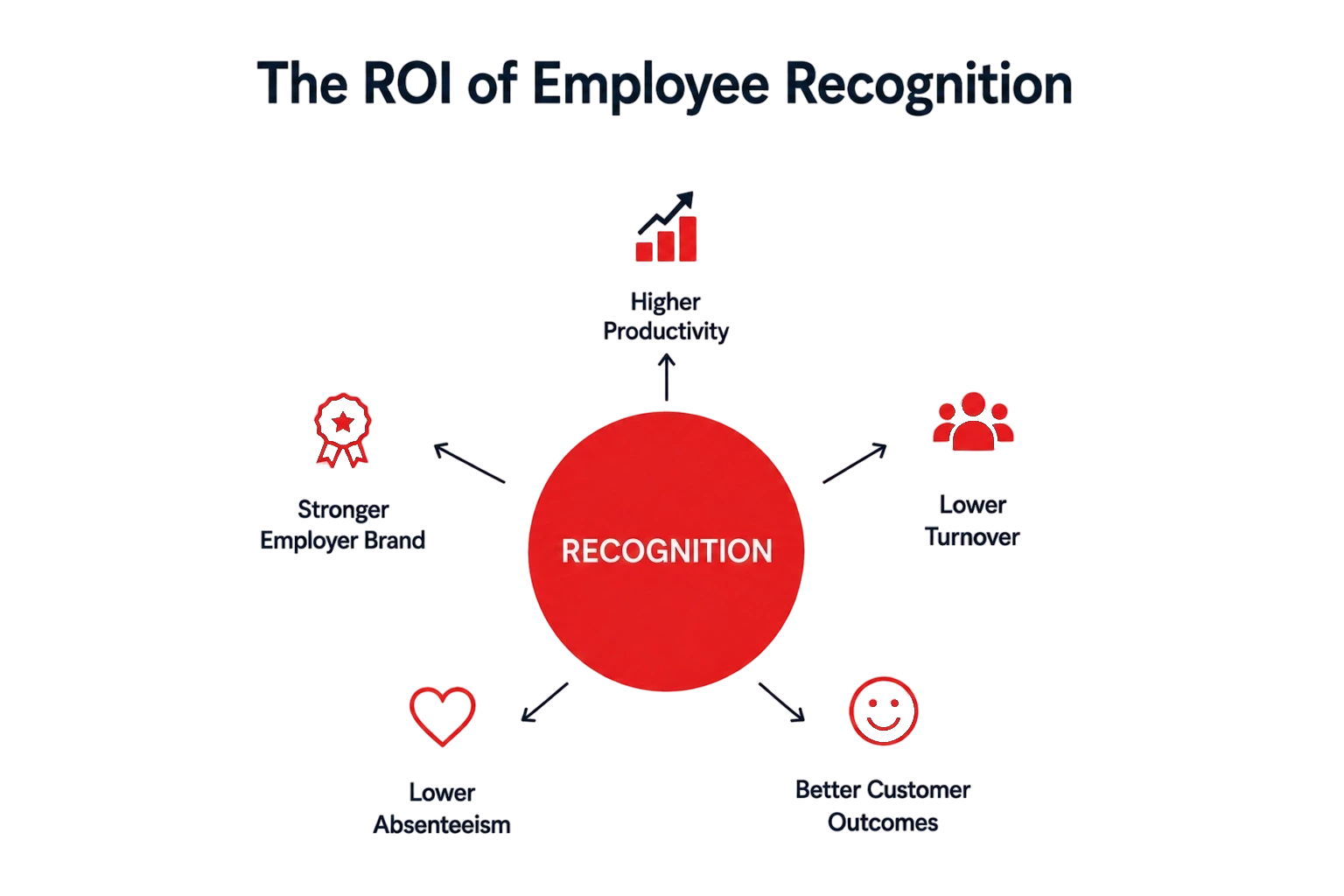
1. Staff Recognition Increases Productivity
One of the most immediate returns from employee recognition is improved productivity. Engaged, motivated employees tend to work harder, solve problems faster, and take greater ownership of their responsibilities.
Research has shown that highly engaged teams deliver 18% higher productivity than disengaged teams. Since recognition is one of the strongest drivers of engagement, even modest improvements in recognition can create substantial productivity gains. For a business with 100 employees, even a small uplift in output per employee can translate into tens or hundreds of thousands of pounds in additional value annually.
2. Recognition Reduces Employee Turnover and Hiring Costs
Replacing employees is expensive. Recruitment fees, onboarding time, lost productivity, and training costs quickly add up when staff leave.
According to Oxford Economics, replacing an employee in the UK costs businesses around £30,000 on average (depending on role and seniority). One of the top reasons employees leave is feeling undervalued or unappreciated.
Recognition helps address this directly. Employees who don’t feel adequately recognised are twice as likely to say they’ll quit within the next year. Reducing even a handful of resignations can often cover the entire cost of a recognition programme.
3. Recognition Lowers Absenteeism
Disengaged employees are more likely to experience burnout, stress, and presenteeism. Over time, this contributes to higher absenteeism and greater operational disruption, which has knock-on effects for wider morale as others have to pick up the slack.
Highly engaged workplaces experience 81% lower absenteeism. While recognition isn’t the only factor influencing attendance, it plays a major role in making employees feel motivated, supported, and connected.
Fewer sick days means:
- Lower temporary staffing costs
- Less disruption to delivery
- Greater consistency for customers
- Higher team morale
All of which positively impact your revenue and bottom line.
4. Recognition Improves Customer Outcomes
Employee recognition doesn’t just affect internal metrics – it can also improve external business performance. Motivated employees deliver better customer service, show more initiative, and create stronger customer experiences. In fact, engaged teams produce 10% higher customer loyalty and engagement scores.
For customer-facing businesses, this can lead to:
- Higher customer retention
- More repeat business
- Better reviews and referrals
- Increased average customer lifetime value
This means that investing in your recognition can contribute to revenue growth as well as internal efficiency.
5. Recognition Strengthens Employer Brand
A strong recognition culture makes organisations more attractive to prospective hires. Candidates increasingly evaluate culture, employee experience, and workplace reputation, and factor these things into their decision to accept roles.
When employees feel valued, they are more likely to speak positively about the company, leave glowing employer reviews, and refer others to join. This helps businesses:
- Reduce recruitment marketing costs
- Hire faster
- Attract stronger candidates
- Improve offer acceptance rates
Your employee recognition efforts can therefore improve talent acquisition ROI as well as retention.

What Does an Employee Recognition Programme Cost?
The cost of implementing employee recognition varies depending on programme size and sophistication, but many UK businesses overestimate the investment required. When budgeting for one, you’ll need to factor in costs like:
- Reward budgets
- Platform/software subscription fees
- Manager training
- Administration time
- Programme communications
Using a recognition platform often makes programmes much cheaper to implement and run. They enable you to automate delivery, reduce admin, and some (like Gifteo) provide access to exclusive reward discounts. Compared to the cost of replacing an employee or decreased productivity across a disengaged workforce, recognition programmes are much more economical.
Organisations that recognise employees effectively benefit from stronger engagement, higher productivity, and improved profitability. For UK businesses, the question isn’t whether employee recognition is worth the cost – it’s whether they can afford the price of not recognising their people.
With the right strategy, employee recognition quickly pays for itself (and then some). If your business wants to improve performance while reducing turnover and disengagement, investing in employee recognition may be one of the highest-ROI decisions you can make.
How Gifteo Helps UK Businesses Maximise Recognition ROI
We help organisations deliver cost-effective employee recognition at scale. With Gifteo, businesses can:
- Reduce administrative burden for HR teams
- Save money on meaningful, flexible rewards that employees actually value
- Benefit from tax-efficient recognition options like discounted gift cards and Lifestyle Spending Accounts
- Automate recognition for birthdays, anniversaries, and milestones
- Deliver recognition consistently across office, remote, and hybrid teams
Our platform makes it easy to implement a high-impact recognition strategy while keeping costs low.