



What Is EAP Counselling?

EAP counselling is a confidential counselling service provided through an employer’s Employee Assistance Programme (EAP). It offers employees access to professional emotional and psychological support when they’re experiencing difficulties at work or in their personal lives.
For employees, the service can provide a safe space to talk through concerns, understand their emotions and develop practical coping strategies. For employers, it offers a structured way to support workforce mental health and wellbeing.
Most EAP counselling services focus on short-term support. Rather than providing indefinite therapy, they typically offer a limited number of sessions designed to help employees manage a particular difficulty, build resilience or identify whether additional treatment is needed.
The service is generally free to eligible employees at the point of use, with the employer covering the cost through its EAP provider.
How Counselling Fits Within an Employee Assistance Programme
Counselling is one component of a wider employee assistance programme.
Depending on the provider, an EAP may also include a confidential helpline, wellbeing resources, financial information, legal guidance and support for managers.
While these services address different needs, counselling focuses specifically on emotional and psychological difficulties.
An employee experiencing anxiety, for example, might speak with an EAP counsellor to explore their feelings and coping strategies. Someone facing financial difficulties might use the programme’s information services alongside counselling to address the emotional impact of money worries.
EAP Counselling vs NHS Talking Therapies vs Private Therapy
All three routes can provide mental health support, but they differ in how employees access treatment, what is available and how long support may continue.
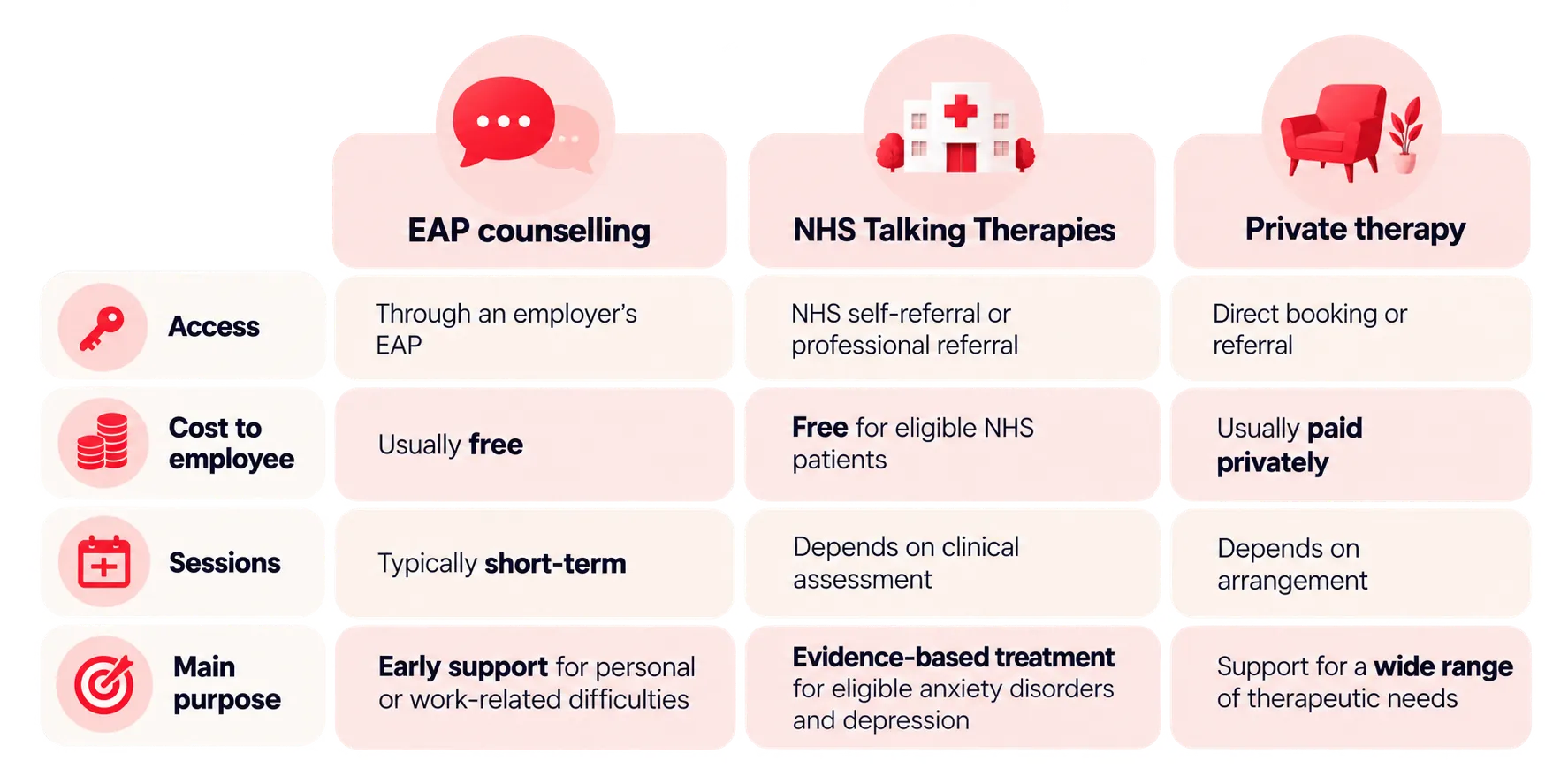
EAP counselling can be a useful first step, but it isn’t a replacement for NHS mental health services or specialist clinical treatment.
Employees needing longer-term or more specialised care may be referred to NHS services or another appropriate professional.
How EAP Counselling Works, Step by Step
For someone using an EAP for the first time, uncertainty about the process can be a barrier.
Understanding what happens from the initial contact to the final counselling session can make the service feel more approachable.
Accessing the Service: Helpline, App or Manager Referral
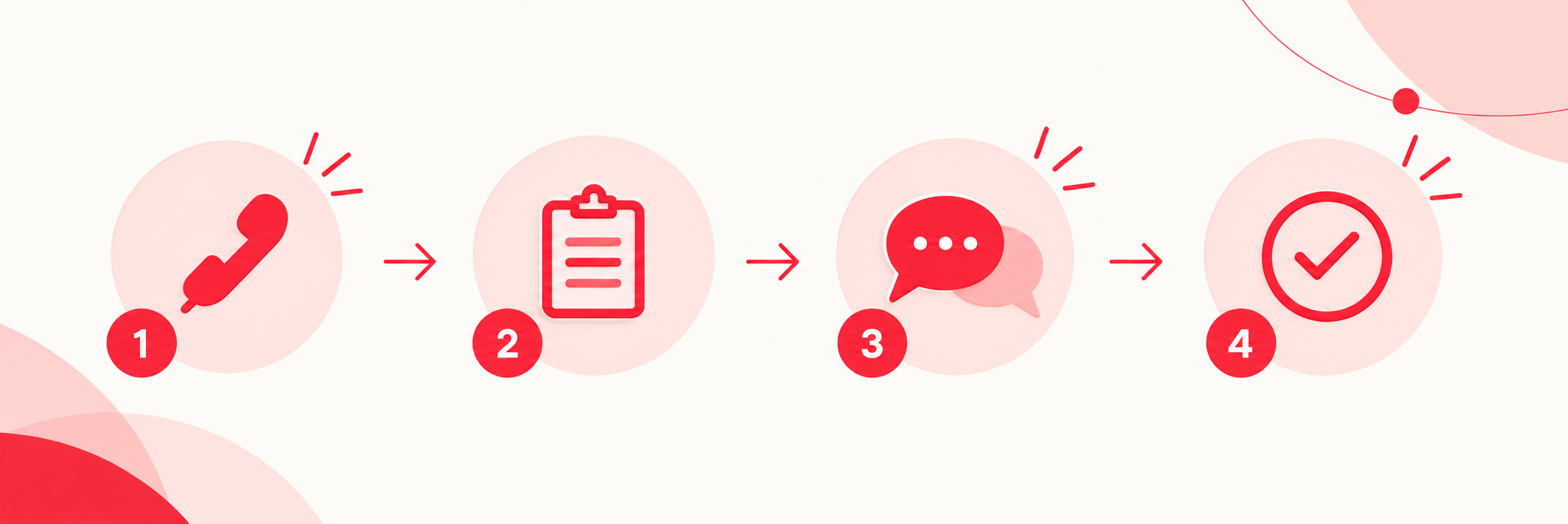
Most EAP providers offer employees a direct way to request support, often through a telephone helpline, online portal or mobile app.
Some provide a 24/7 helpline for initial assistance, although this doesn’t necessarily mean counselling appointments are available around the clock.
Employees can generally contact the provider without asking their line manager or HR department for permission.
Managers may also suggest an EAP when they notice an employee struggling with stress, absence or personal difficulties. Where formal management referrals are available, they follow a separate agreed process and should not be confused with confidential self-referral.
The important distinction is that an employee should feel able to seek help without having to disclose personal concerns to their employer.
The Initial Assessment
The first conversation is usually an assessment rather than a full counselling session.
An EAP professional may ask about the employee’s current difficulties, emotional wellbeing, relevant circumstances and what they hope to achieve.
This helps determine whether short-term EAP counselling is appropriate or whether another type of support would better meet their needs.
For example, an employee experiencing manageable workplace stress might benefit from structured short-term counselling. Someone presenting with more complex or urgent mental health needs may require specialist assessment or treatment.
Telephone, Video and Face-to-Face Sessions
EAP counselling can be delivered in different formats, depending on the provider and available services.
Telephone counselling offers flexibility for employees who work remotely, travel frequently or prefer not to attend an appointment in person.
Video counselling provides face-to-face interaction without requiring travel. In-person sessions may also be available through some EAP providers.
The approach used by an EAP counsellor may draw on recognised therapeutic methods, including person-centred counselling, solution-focused approaches or cognitive behavioural therapy (CBT), depending on the practitioner’s training and the service offered.
The most appropriate format depends on the employee’s needs, preferences and the nature of the difficulty.
How Many EAP Counselling Sessions Do Employees Get?
There is no universal number of EAP counselling sessions available to every UK employee.
Many providers offer a defined number of short-term sessions, often around four to six, but the actual allowance depends on the employer’s contract, the provider and the employee’s assessed needs.
Some programmes offer different levels of support depending on the presenting issue.
If an employee needs more extensive therapy, the EAP may recommend another service or help them understand their next steps.
For HR teams, clearly explaining the number of available sessions is essential. Employees shouldn’t have to guess whether they are entitled to one conversation or a structured course of counselling.
What Can EAP Counselling Help With?
Employees don’t need to be experiencing a mental health crisis to benefit from counselling.
EAP therapy can support a range of emotional and psychological challenges, including difficulties that originate outside the workplace but affect an employee’s overall wellbeing.
Work-Related Stress and Burnout
Workplace pressure, excessive workloads, organisational change and difficult professional relationships can all contribute to stress.
An EAP counsellor can help employees explore their reactions, identify sources of pressure and develop healthier coping strategies.
For someone experiencing early signs of burnout, counselling may provide an opportunity to recognise warning signs and consider practical steps towards recovery.
However, counselling shouldn’t be used as a substitute for addressing organisational problems such as unmanageable workloads, bullying or poor management practices.
Employers remain responsible for identifying and managing workplace risks to employee health.
Anxiety, Low Mood and Bereavement
Employees may seek EAP counselling when experiencing persistent worry, low mood, emotional exhaustion or grief following a bereavement.
Counselling can provide a confidential environment to discuss difficult feelings and develop strategies for managing everyday challenges.
Short-term support may be appropriate for some concerns, while persistent or more severe symptoms may require assessment and treatment through NHS or specialist mental health services.
The role of an EAP is to provide appropriate support, not to guarantee that every mental health condition can be resolved within a small number of sessions.
Relationship, Family and Money Worries
Personal circumstances can affect an employee’s concentration, sleep, emotional wellbeing and ability to manage everyday responsibilities.
Relationship difficulties, family conflict, caring responsibilities and financial pressures are all common reasons someone might seek confidential support.
An EAP counsellor can help employees process the emotional impact of these situations.
Where an EAP also offers financial information or legal guidance, employees may be able to access practical resources alongside counselling.
This broader approach recognises that personal wellbeing and workplace wellbeing are closely connected.

Is EAP Counselling Confidential?
Confidentiality is one of the most important aspects of employee assistance programme counselling.
Employees need to trust that seeking psychological support won’t automatically result in their manager learning about their personal difficulties.
EAP counselling is generally confidential, subject to the provider’s privacy policy, professional obligations and clearly explained exceptions.
What Employers Can and Cannot See
For ordinary confidential self-referrals, employers should not receive an employee’s counselling notes or details of what they discuss with their counsellor.
Instead, EAP providers may supply anonymised or aggregated reporting about service usage, broad categories of presenting concerns and overall programme engagement.
This helps HR teams evaluate the service without accessing individual therapeutic conversations.
Any reporting must be handled in line with applicable data protection requirements, particularly because mental health information is sensitive personal data.
Employees should be told clearly what information is collected, who can access it and how it is used.
When Confidentiality Has Limits
Confidentiality isn’t absolute.
There may be circumstances where an EAP professional needs to share information, for example where disclosure is required by law or where there is a serious safeguarding or safety concern.
The precise rules depend on the provider, the circumstances and applicable professional and legal obligations.
Formal management referrals may also involve separately agreed reporting arrangements, which should be explained before participation.
Employers should ensure their provider communicates these boundaries clearly rather than making unconditional promises that nothing will ever be disclosed.

@The Benefits of EAP Counselling for Employees and Employers
Effective EAP counselling can help employees address difficulties before they become more disruptive to their wellbeing or working lives.
For employers, the value lies in providing accessible support while building a workplace culture where mental health concerns can be addressed earlier.
Fast Access to Support, Without NHS Waiting Lists
An EAP can offer an additional route to counselling without requiring employees to begin by joining an NHS waiting list.
Depending on the provider, employees may be able to arrange an initial assessment relatively quickly, although appointment availability varies.
This doesn’t mean NHS Talking Therapies should be overlooked. In England, eligible adults can self-refer for NHS talking therapies for anxiety and depression, and the service provides evidence-based treatment for a range of conditions.
For employees, the benefit of an EAP is having another accessible option when they need support.
Lower Absence and Presenteeism
Poor mental health can affect performance even when employees remain at work.
Presenteeism occurs when someone continues working despite being unwell, but struggles to perform at their usual level.
According to Deloitte’s 2024 research, poor mental health costs UK employers an estimated £51 billion annually, including approximately £24 billion associated with presenteeism.
Confidential counselling can help employees seek support before difficulties escalate, potentially reducing disruption to their wellbeing and working lives.
However, EAP counselling is most effective when combined with reasonable workloads, supportive management and appropriate workplace adjustments.
A Measurable Return on Investment
EAP counselling is also an investment that HR and reward teams may need to justify.
The UK Employee Assistance Professionals Association has published research linking EAP usage to employer financial returns. Its 2021 analysis reported an average return of £8 for every £1 spent on an EAP, based on its ROI calculator.
These estimates should be interpreted carefully. They concern EAP programmes overall rather than isolating the financial effect of counselling sessions.
For a more meaningful assessment, employers should examine their own programme’s usage, employee feedback, accessibility and relevant workforce wellbeing indicators.
Why Employees Don’t Use EAP Counselling (and How HR Can Fix It)
Providing counselling isn’t the same as ensuring employees feel comfortable accessing it.
An organisation may invest in a comprehensive EAP but see limited engagement because employees don’t know the service exists, misunderstand its purpose or worry about confidentiality.
Low Awareness and Stigma
Some employees assume counselling is only appropriate for serious mental health conditions. Others worry that contacting an EAP could affect how their employer perceives them.
Unclear information about confidentiality, eligibility and the number of sessions available can create further hesitation.
HR teams can address these barriers by explaining that counselling is available for a wide range of personal and work-related concerns, not only crises.
Communication should also make clear that employees can usually contact the provider directly and that ordinary confidential counselling conversations aren’t shared with their manager.
How to Promote Your EAP All Year Round
EAP communication shouldn’t be limited to onboarding or Mental Health Awareness Week.
Employees need regular reminders of the support available, particularly during periods of organisational change or increased pressure.
Employers can improve awareness by incorporating counselling information into induction, internal communications, manager training and their employee wellbeing platform.
Practical communication should answer the questions employees are most likely to have: how to access counselling, whether it is free, how confidentiality works and what happens after the first contact.
Managers can play an important role by signposting support without pressuring employees to disclose personal information.
HR teams should also monitor anonymised usage trends and employee feedback to understand whether communication is reaching different parts of the workforce.
How EAP Counselling Fits Into a Wider Wellbeing Strategy
EAP counselling provides an important route to individual support, but it cannot resolve every cause of poor mental health at work.
An employee may benefit from counselling while still facing an excessive workload, unclear expectations or a difficult working environment.
That is why counselling should sit alongside broader employee mental health support, effective management practices and organisational efforts to reduce workplace stress.
A connected employee wellbeing platform can help employees discover available services, while wider employee wellness programmes can support physical, emotional and financial wellbeing.
Employers should also consider how counselling fits within their broader employee benefit schemes, ensuring that mental health support is visible, accessible and relevant to the workforce.
Gifteo helps organisations bring employee assistance and wellbeing benefits into a more connected employee experience, making it easier for employees to find and engage with the support available to them.